

How to Layer Necklaces Without the Tangle: The Ushve Guide
A single necklace finishes an outfit. Two or three, layered well, tell a story — a little polish, a little play, and that quietly-put-together look that seems effortless precisely because it isn't accidental. Layering is the easiest way to make pieces you already own feel new; the trick is knowing a few rules about length, weight and balance, and then breaking them on purpose.
Here's how we layer necklaces at Ushve — tested on real necklines, real workdays, and the occasional wedding brunch.
- Start with lengths: the 5 cm rule
- Balance weights: one lead, two supporting
- The pendant question
- Necklines change everything
- The no-tangle toolkit
- Three layered looks to copy
- FAQ
Start with lengths: the 5 cm rule
Tangles and clutter happen when chains sit on top of each other. The fix is simple: keep roughly 5 cm (about two fingers) between each layer. A classic three-layer stack runs choker-ish (38–40 cm), princess (45 cm), and matinee (50–55 cm) — each chain gets its own line on your skin, and each reads clearly.
Two layers? Widen the gap slightly. The eye needs the space between chains as much as the chains themselves.
Balance weights: one lead, two supporting
Give the stack one hero — a pendant, a charm chain, a crystal detail — and let the other layers be quieter, finer chains. When every layer shouts, none of them are heard. A fine gold-plated chain is the workhorse of layering: it adds light and structure without competing.
The pendant question
One pendant per stack is the safe rule; it anchors the composition and draws the eye to a single point. If you want two, make sure they sit on clearly different lengths and differ in scale — a small charm high, a statement drop low. Two same-sized pendants at similar lengths will swing into each other and read as clutter.
Necklines change everything
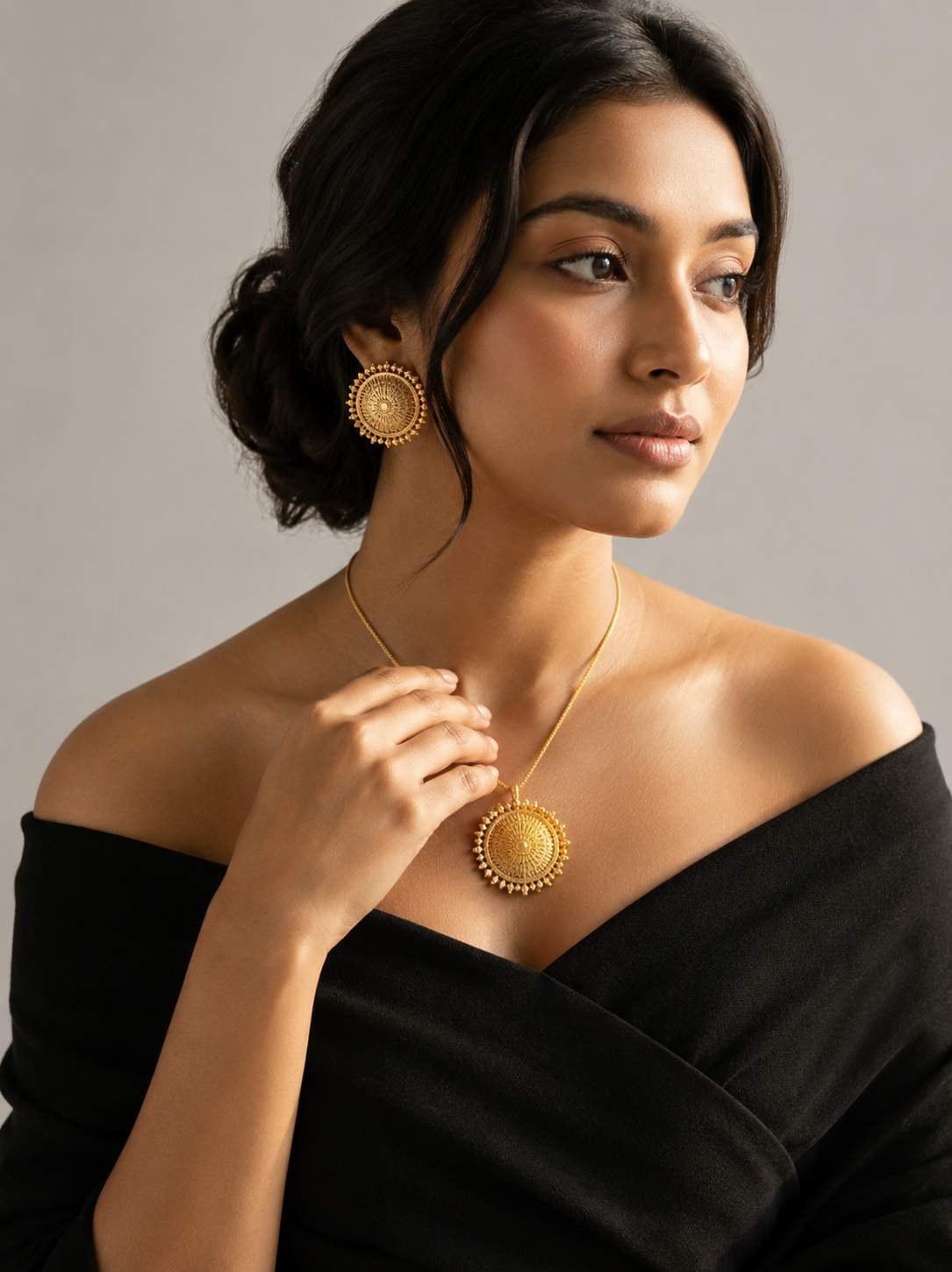
Deep and open necklines (V-necks, sarees, slip dresses): the full three-layer stack has room to breathe. This is layering's home ground. Crew necks and high necks: move the stack shorter — two snug layers above the fabric line, or a single longer matinee chain over the fabric. Collared shirts: one or two fine chains inside the collar, nothing longer — polish, not performance. Off-shoulder and strapless: anything goes; a choker-led stack is especially flattering.
Layering isn't only for evenings. A two-chain stack over a work shirt is the fastest upgrade in the wardrobe.
The no-tangle toolkit
Tangling is the reason most people give up on layering. Four fixes that actually work:
1. Different weights per layer — chains of identical gauge twist around each other; mixed gauges don't. 2. The 5 cm spacing — distance is the best detangler. 3. Clasp placement — fasten each chain, then rotate clasps to the back one by one; clasps left at the side migrate and snag. 4. Store flat, hang separately — tangles mostly happen in the drawer, not on the neck.
If two chains still insist on twisting, swap one for a beaded or textured style — texture interrupts the spiral.
 The base layer: a fine handcrafted chain from the Ushve edit, made in Jaipur.
Three layered looks to copy
The workday two-stack: fine chain (40 cm) + small pendant (45 cm). Quiet, catches light on video calls, zero fuss. The weekend three-stack: textured chain, pearl-detail princess length, charm matinee — one texture, one shine, one story. The festive layer: a crystal-detail necklace leading the stack over a deep neckline, earrings kept minimal so the neckline leads. Stylists have called layered chains the new statement necklace — Vogue India's trend pages have tracked the layered-chain look across several seasons.
Every Ushve chain and necklace is handcrafted in Jaipur and finished to be light — because a stack you can feel all day is a stack you'll stop wearing.
The takeaway
Start with two chains and the 5 cm rule. Add a pendant when you want a focal point. Match the stack to your neckline, rotate your clasps back, and store chains apart. That's the whole craft — the rest is play.
Build your stack → explore handcrafted chains and necklaces from the Ushve edit, made in Jaipur and finished to be worn every day.
Get the next guide first
Styling edits, care notes and new-drop previews — straight from Jaipur to your inbox.
See What's New